
What's in a bag?
Ursula K. Le Guin, Millie Bobby Brown and Samuel Beckett, Oliver Postgate

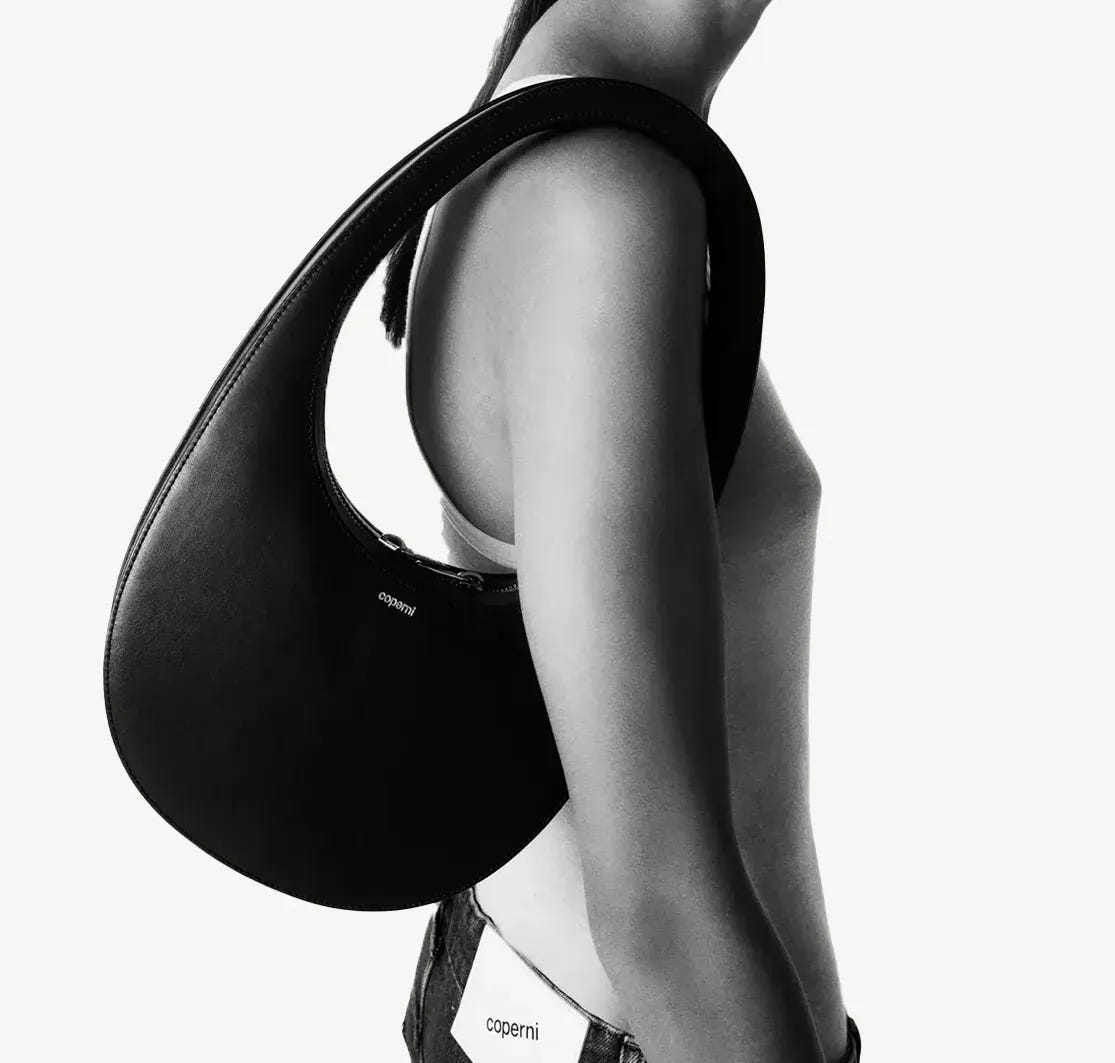
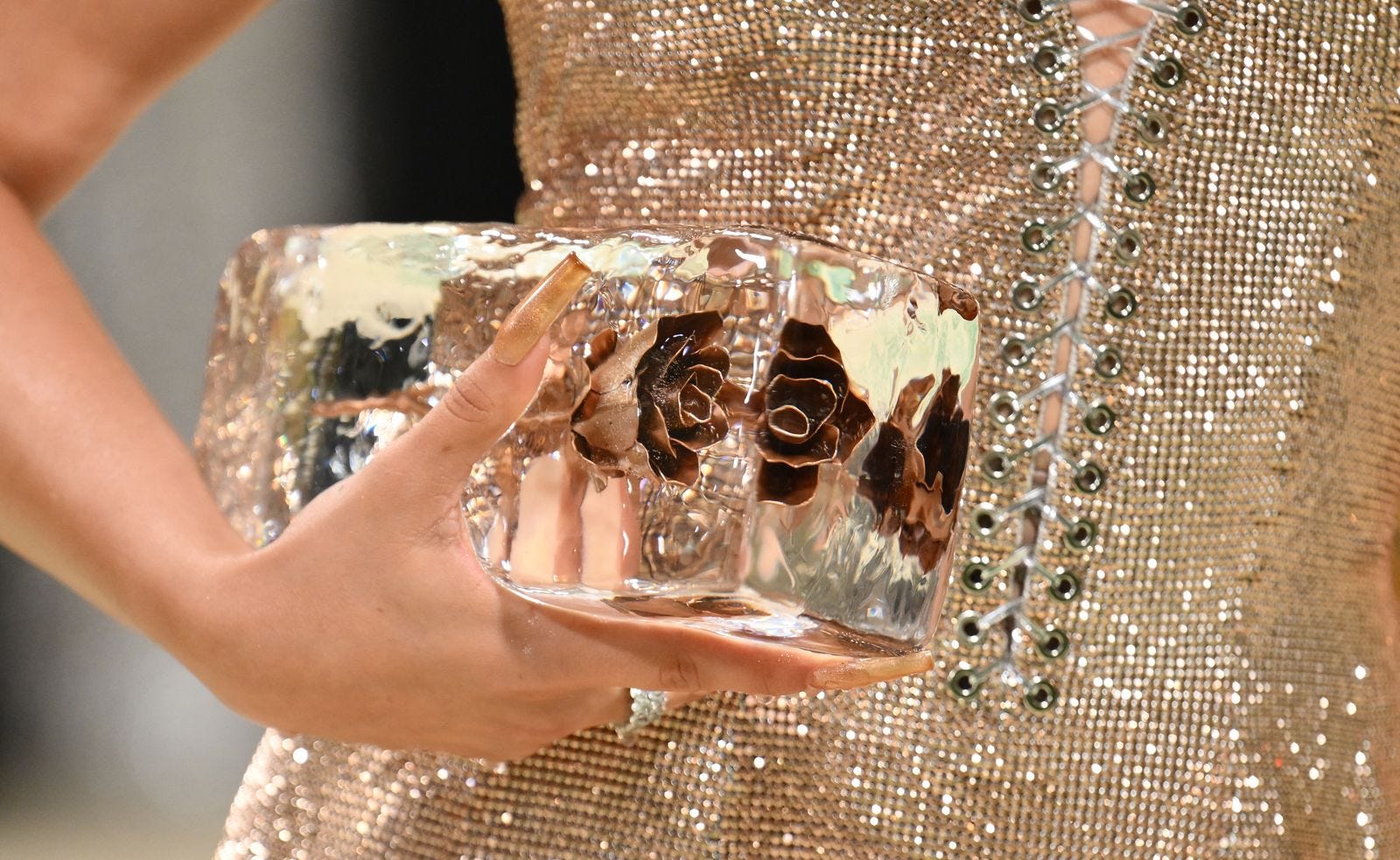
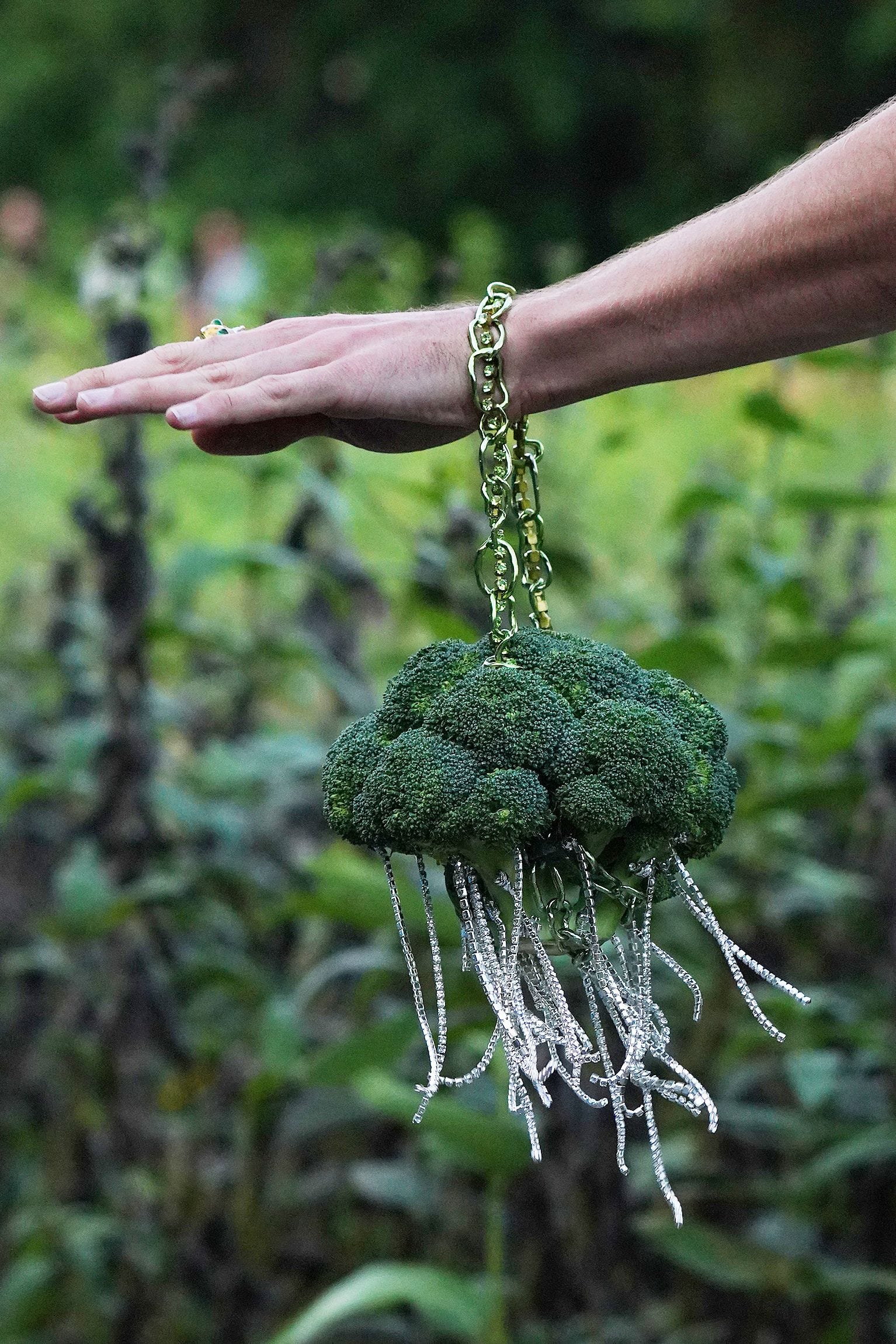
Ziiiiip! Opening touch. Here’s a bag I’d take. “Wouldn’t it be a good thing if you had something to put Baby Oo Oo in so that you could pick the oats with both hands? A leaf a gourd a shell a net a bag a sling a sack a bottle a pot a box a container.” For “seeds, roots, sprouts, shoots, leaves, nuts, berries, fruits and grains” or for “bugs and mollusks and netting or snaring birds, fish, rats, rabbits and other tuskless small fry”. Pictured, Coperni’s Swipe Bag lives, for me, as if the image of a bag came alive. I knew it first in its glass edition, fell for its leather, and was interested enough to find myself a little more lost in the world upon discovering its prepossessing form was “inspired by the 'swipe to unlock' icon of an iPhone”. The grey circle you drag along to make green. Oh, boy, oh well. I think it’s as if you’re about to drop it but I did wonder whether the Mini Swipe Bag would be large enough to hold an iPhone so, so. Doja Cat had candy in hers at the Grammys.
Ursula K. Le Guin’s Carrier Bag Theory of Fiction, hopping on Elizabeth Fisher’s anthropological work, contends that it might be worth recognising the bag—or any such object with the capacity to carry—as a cultural object just as original and just as fundamental as that spike we might call a spear. We’ve been overlooking it till now, says Le Guin, because hunting tends to make for a better story when you get back:
It is hard to tell a really gripping tale of how I wrested a wild-oat seed from its husk, and then another, and then another, and then another, and then another, and then I scratched my gnat bites, and Ool said something funny and we went to the creek and got a drink and watched newts for a while, and then I found another patch of oats…
The gatherer is not a Hero. So what would you like to hold on to? Not the pretence of newness, nor the pretence of technology’s influence, dear Swipe. It’s just a bag.
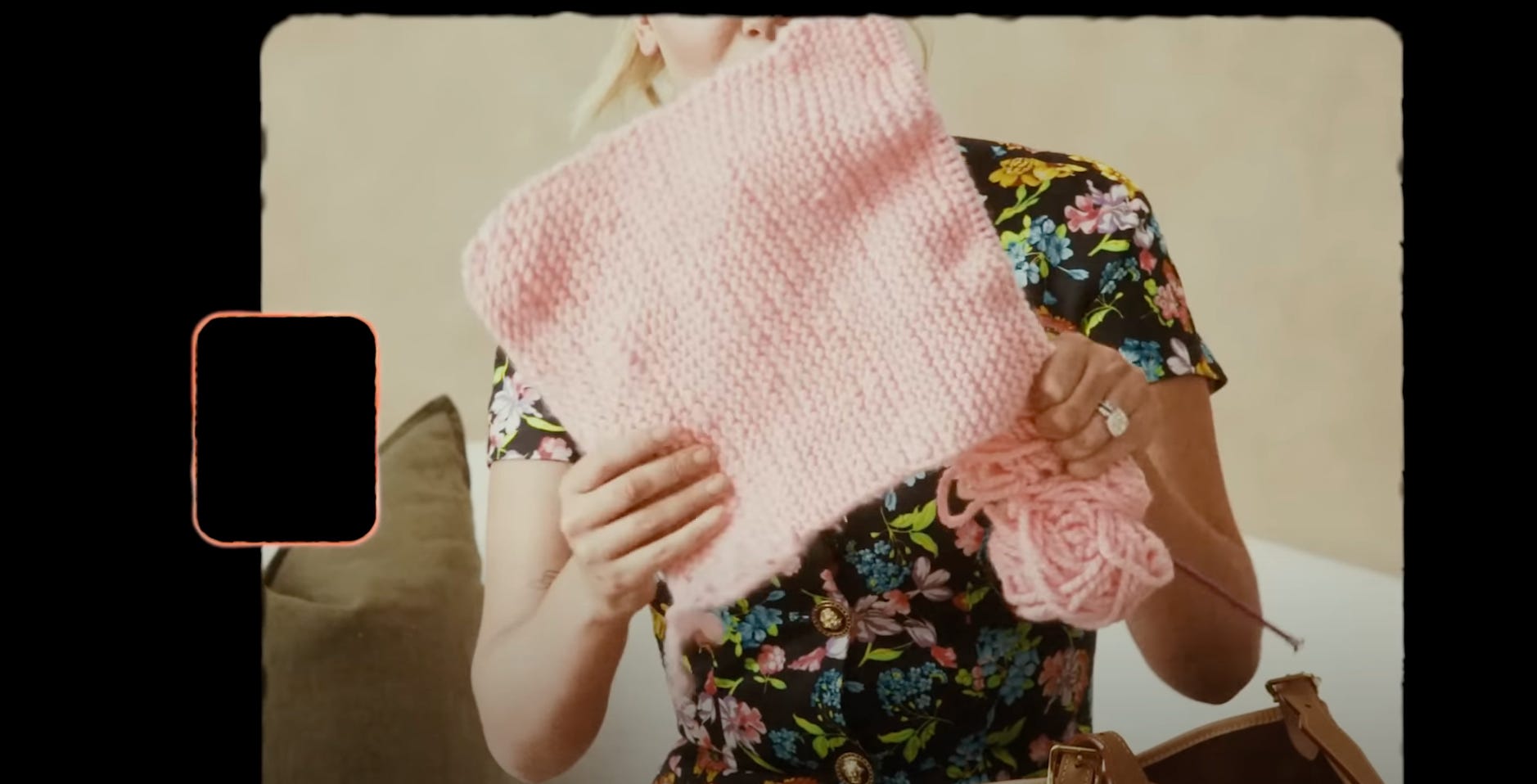
Millie Bobby Brown retrieves from hers, and holds up for the camera, the sweet beginnings of a bubble-pink scarf. That’s what’s in there. She tells us, Vogue, that the varied tension of the knit tells a story of its making. “It shows where I was in the time,” she says. At home and establishing a control her first few rows were careful, so neat. Later stitches are tighter, woven together by her stressed hands as she anticipates her 21st birthday, and most recently they are loose. She’s sat sleepier now, and older, on longhaul flights. The rolling and strung pull and give we see, between a Now and a Detectible Then, might warp with Krapp’s spools in Samuel Beckett’s La Dernière bande (1958), his listening and listening again, his own self on tape. It is his birthday too, after all. “Become as much as possible one with the machine,” Beckett directed.
There’s Barbie, Molly, Max, Teddy, Dorothy, Jimmy, Agnes, Pookie, Juno, and Rigby. “Did I name Winnie?” Millie is listing her “10 personal dogs”. There’s this eleventh she says and the eleventh is Winnie. She thinks Winnie might not quite fit: “After Jimmy Fallon, [Winnie] got really big headed and she asked to be referred to as a human so now I’m not able to, like, say her in, like, the dog list. She likes to be, she is, a human.” What?
Beckett again in Oh les beaux jours (1961) writes a Winnie. I remember as well now that Beckett’s Winnie’s daughter is named, Millie. It always did feel that Beckett was naming his characters in such a way that hinted towards mine—Molloy, Malone, Willie, Winnie too—an on-the-nose mention in Oh les beaux jours confirmed almost too clearly if offstage what I felt I already knew. And Millie goes on: “Honestly [Winnie] thinks that Jake [Millie’s husband, Jake Bongiovi] is this bad person in the house. She’s like, who is this bad person? Like why is he here?” “I’m scared of Winnie, everyone is.” Scared? There is something haunted about her. Beginning the play buried up to her waist, in the second act to the neck, she largely monologues and sometimes screams. There are moments—we are reminded they are each one of many—where Winnie reveals herself eerily aware that the curtain will lift tomorrow and she will perform again. Why is she here? Winnie takes us through her “grande sac noir”. A gift from Willie, her all but unseen husband. Jake Bongiovi too speaks from off screen. “Le sac [comme Willie] est là, le même que toujours.” The bag’s contents, “un tube de dentifrice”, “une brosse à dents”, some “rouge à lèvres”, “un fond de liquid rouge” for an unspecified “amélioration”, tug and shift us back and between constancy and novelty again. The paraphernalia of routine reveals to us, and to Winnie herself, the histrionic sense of things. And here’s Millie, gradually enclosed by this pile of things she carries with her, puts out, puts on. She’s going somewhere!
Travel, in itself, “in general, a thing that holds something else.” I tend to pack it all in, the eyes and the lips, to the washbag that usually sits beside my sink. It is orange with pink cherries on its skin and my mum gave it to me. It usually holds all the bits I don’t reach for daily, a red mascara, lovely, but scary too. I wore it for the first time on a day that I sobbed and I looked down at blood-stained tissue after wiping my eyes. Leftover red liquid, or, the “crimson torrents”, for Le Guin, of a hunt. So when I pack I pour out these undesirables onto the sinkside. The spoils.
Sometimes I’ve read the kind of thing that tells me of peach-pinks and reddish-browns that would be the kinds of things I should put on my eyelids because I have blue eyes. When I wear an electric-esque blue mascara it’s then that I’m doing something off because my eyes do switch to grey. Only so much, blue. And it’s one of those things that a person mentions, like a magpie, like a bright yellow bag that my friend found that I’ve sewn buttons onto. Once in a different year when my eyelashes were greener I was told how fantastic they were by the greengrocer in the Covered Market in Oxford. She really enthused about them and asked if I’d wait a moment to buy the blood oranges whilst she went to get her glasses so as to see my eyes better. And I do like to think of the red, now, as the butcher’s choice.
Not spitting but drawing out the pits and dropping them in the corner of the punnet with the cherries you haven’t eaten yet. They’ll bleed. There’s a blush—colour: Peach! Success!—that I am dusting at the moment which brags its lasting power; there’s no need to reapply. Here: I reveal myself in need, after all, of narrative. Where’d be the story in putting it on just once! Needs next. Don’t, don’t give the performance up. A friend expressed his jealousy once at my getting out a compact and reapplying a lip for the look of a man I might have made eye contact with and nothing else. It is a gesture that he did not feel his masculinity allowed. There is, to be sure, a jouissance to a reapplication; especially, too, to the sudden fuzz of blush, just dust ungraspable, monochrome, imaged. I did this to myself. Like biting the cherry in half in the afternoon, or at least under the sun, and rouging the cheek, even, with its juice. Thank goodness I just brought it with me, and thank goodness I had somewhere to put it. The bus lurches, the bag shifts, and the powder spills. Beckett’s Winnie’s hand mirror “sera de nouveau là demain, dans le sac”. It’ll be there tomorrow, in the bag. Sow seed, flesh out. On, etc.
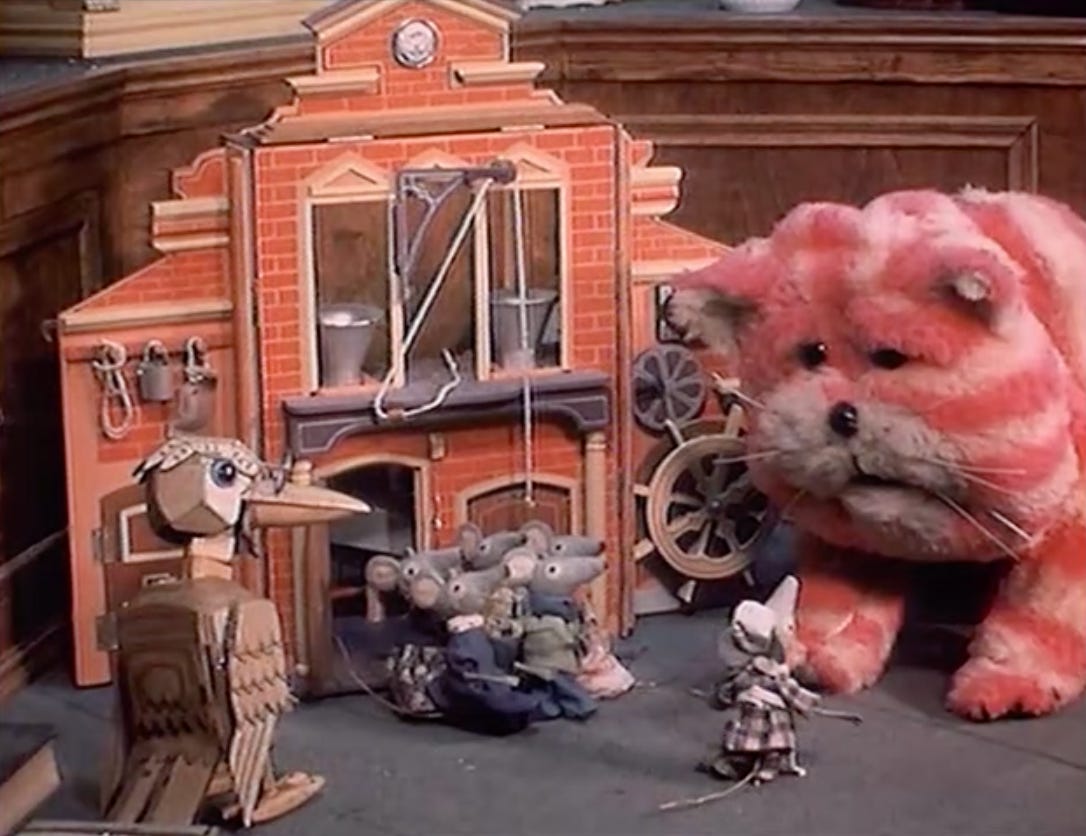
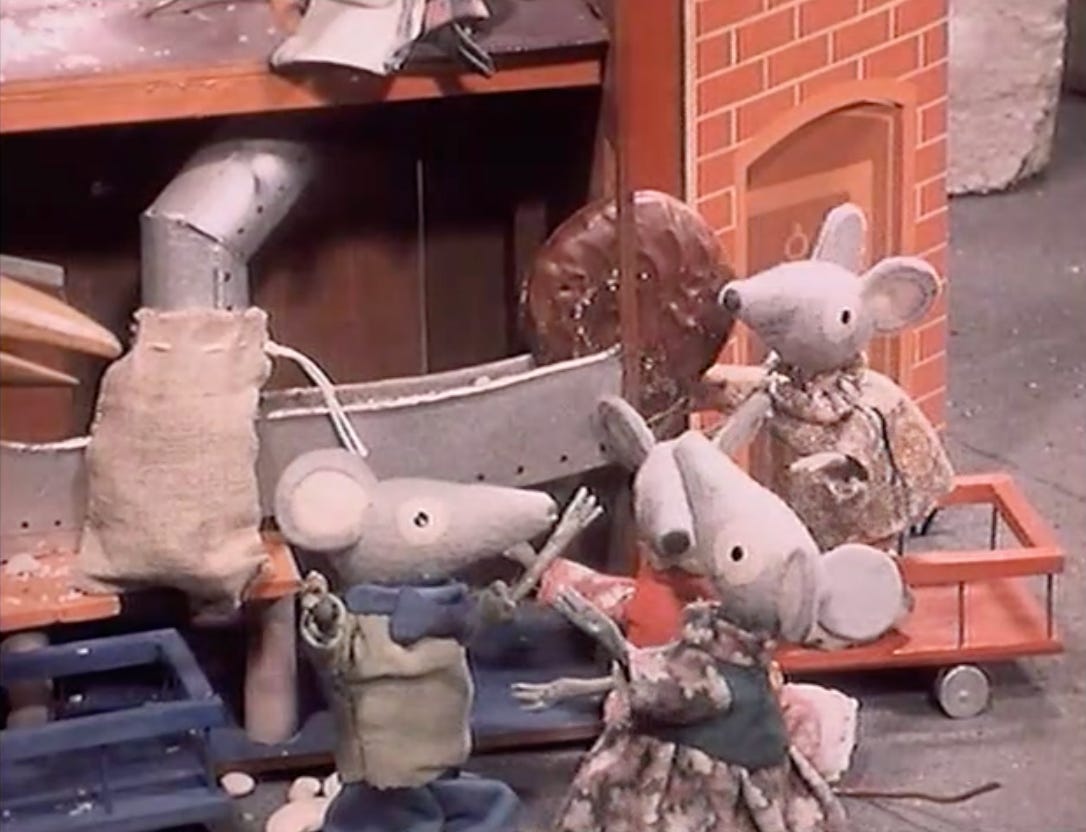
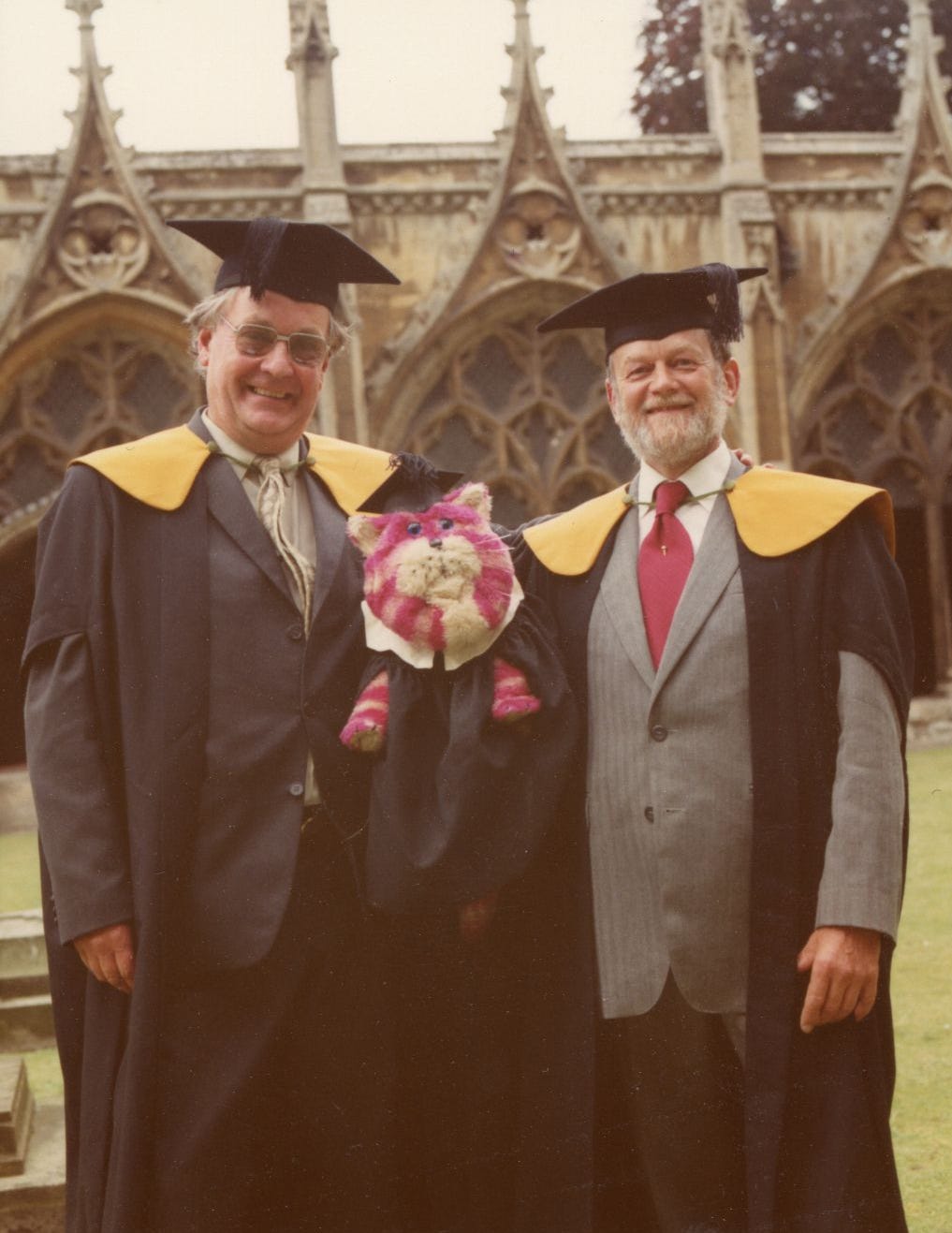
Even if you lose track of things you’ll probably find them again further on. April 1925, and Oliver Postgate is born. Later, in his Bagpuss, 1974, what you put in might not be what comes out—the mice (mice) will convince Bagpuss (pink and white cat) that their new machine takes breadcrumbs and butterbeans and makes chocolate biscuits. Professor Yaffle (wooden woodpecker) has his suspicions and ultimately reveals the operation a sham. Rats! The cat, though once deceived, is out of the bag. Timing—the bag an archive—we believed the mice’s sacks at first, at least I did—crumbs, were there even crumbs in there! Wittgenstein: “What if one insisted on saying that there must also be something boiling in the picture of the pot?” It’s really: what’s keeping us going? Other Vogue visitors find whatnot from days previous, Billie Piper has leftover snacks and fuzz. Why, on earth, would they be related—and why would we remember even if they were. Floral, the bag drips or holds itself, corsage.
It’s the kind of thing you can’t really get into, but even so, we might be in. In March, Coperni made a Swipe Bag out of silica aerogel that weighed in at 33g. The aerogel is 99% air, solid but empty—you wouldn’t even know you had it on you. A particle collector, it gathers stardust. “There is time enough to gather plenty of wild oats and sow them too, and sing to little Oom, and listen to Ool’s joke, and watch newts, and still the story isn’t over. Still there are seeds to be gathered, and room in the bag of stars.” And what a bag of stars! Come and celebrate! We did it! It’s: in the bag! We all need to move on, and on—chuck it all in:
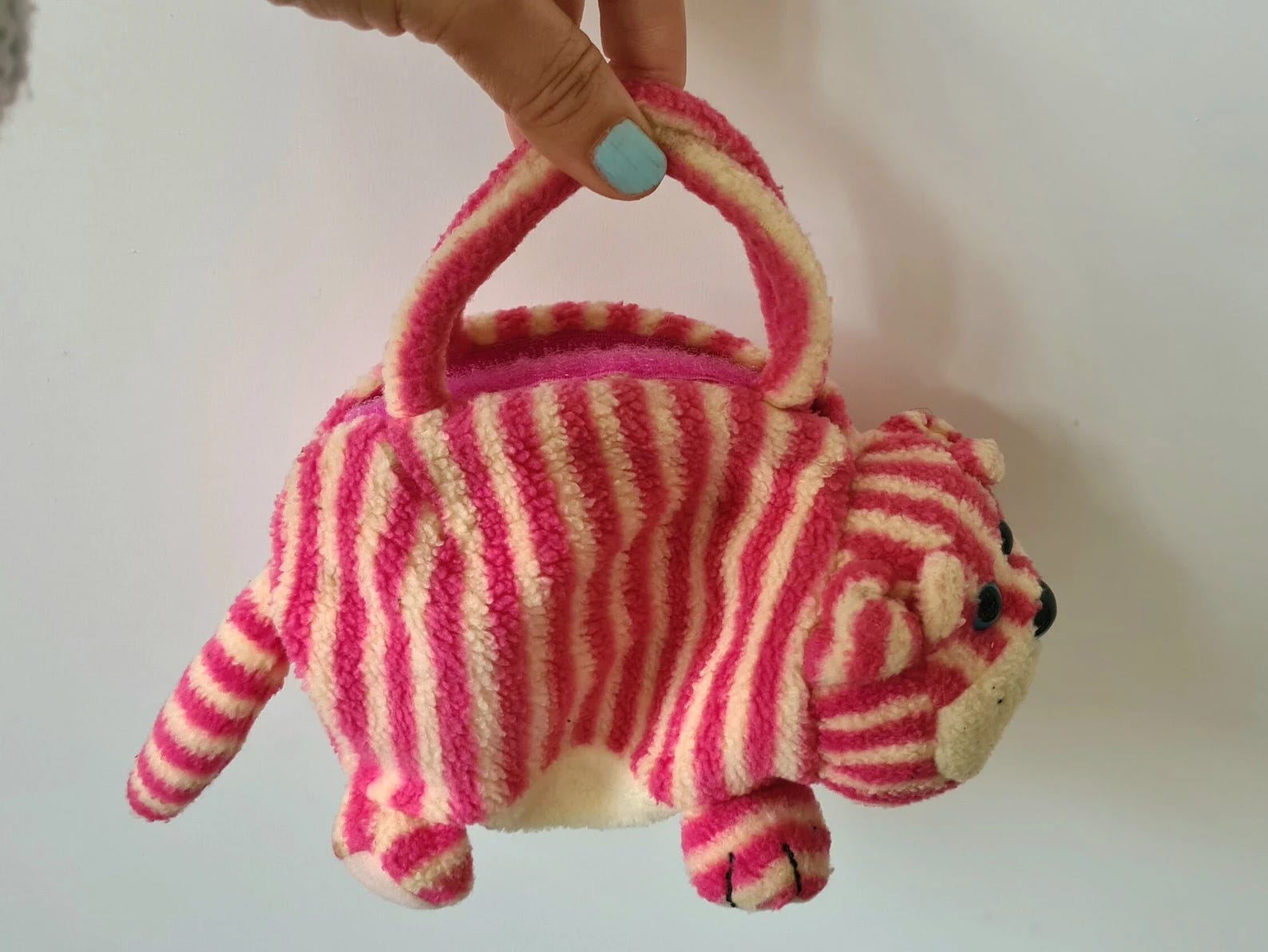
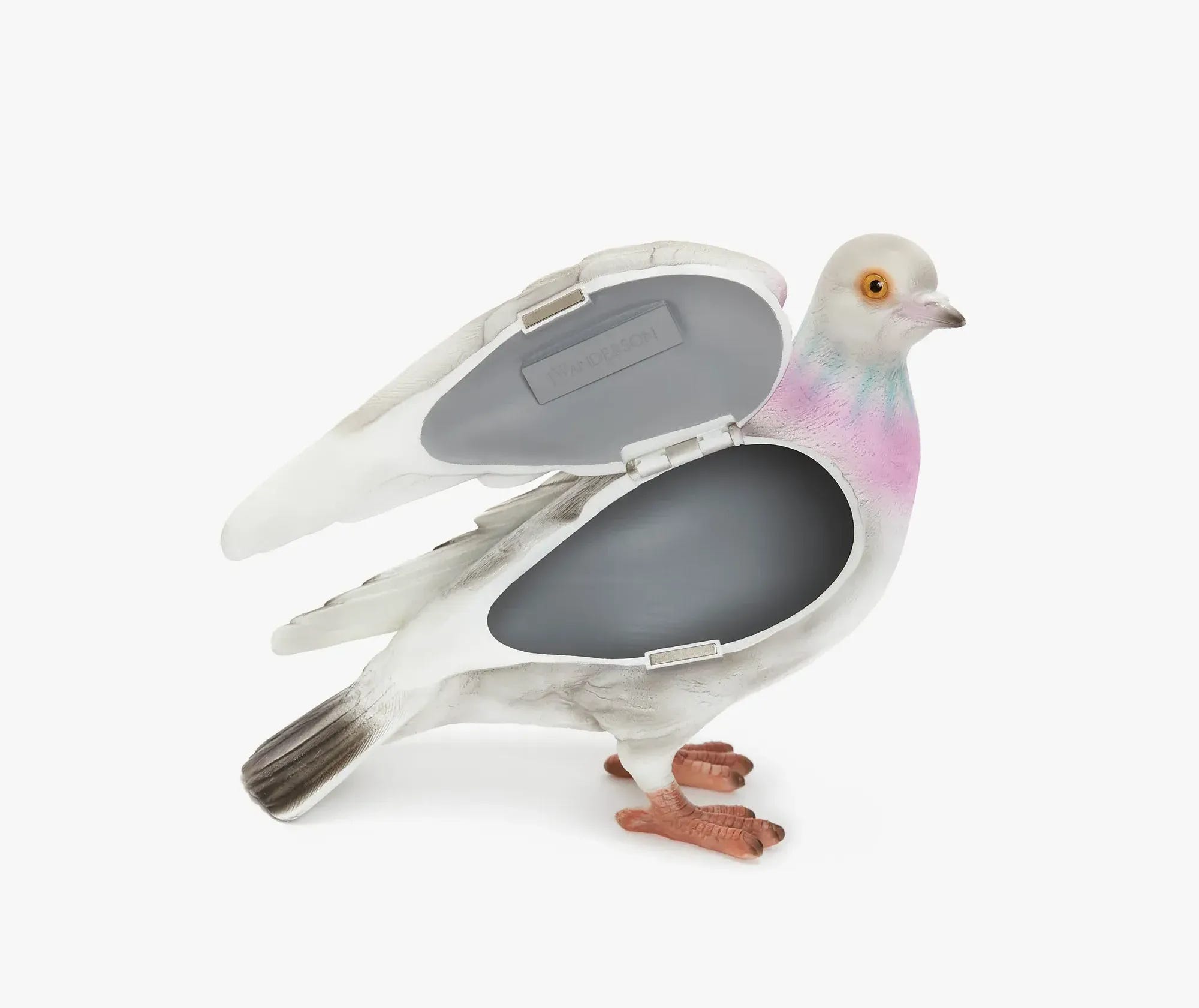
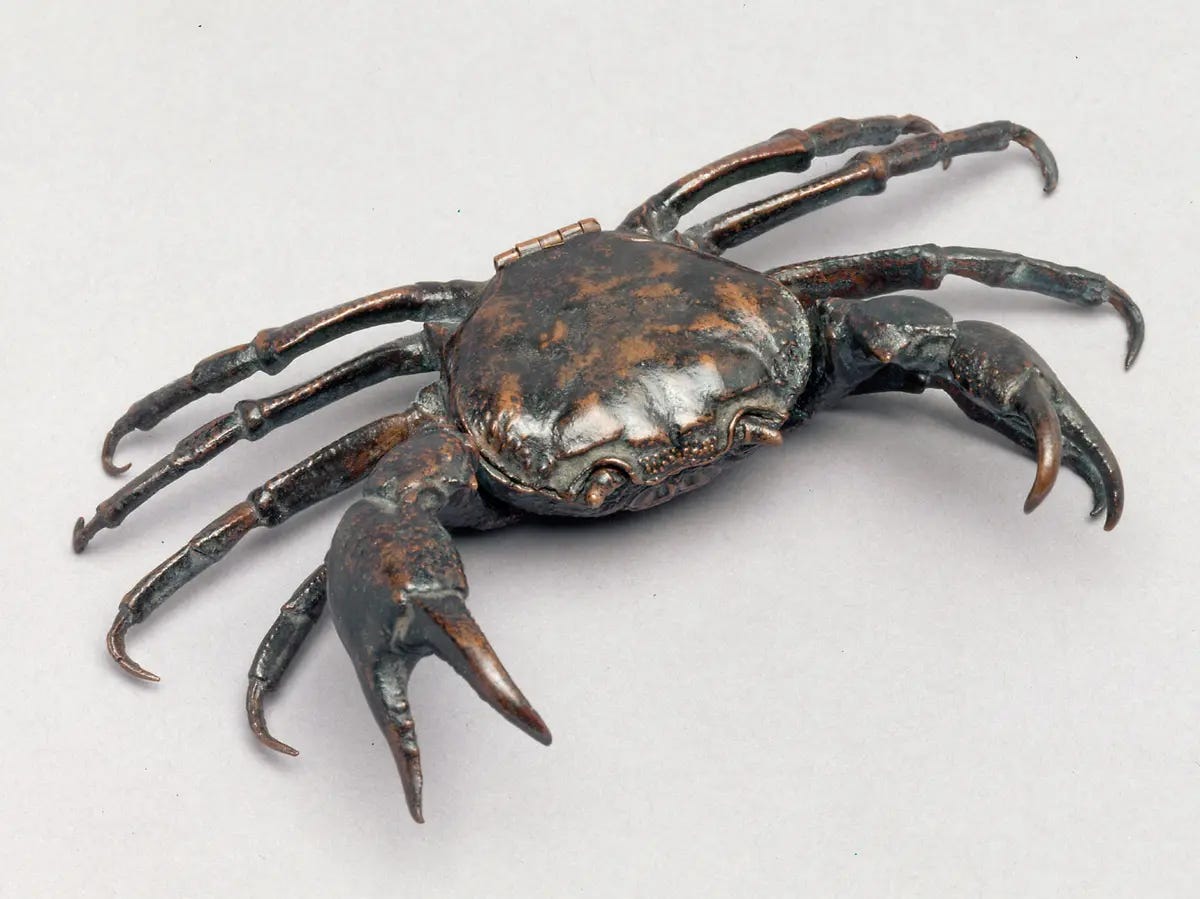
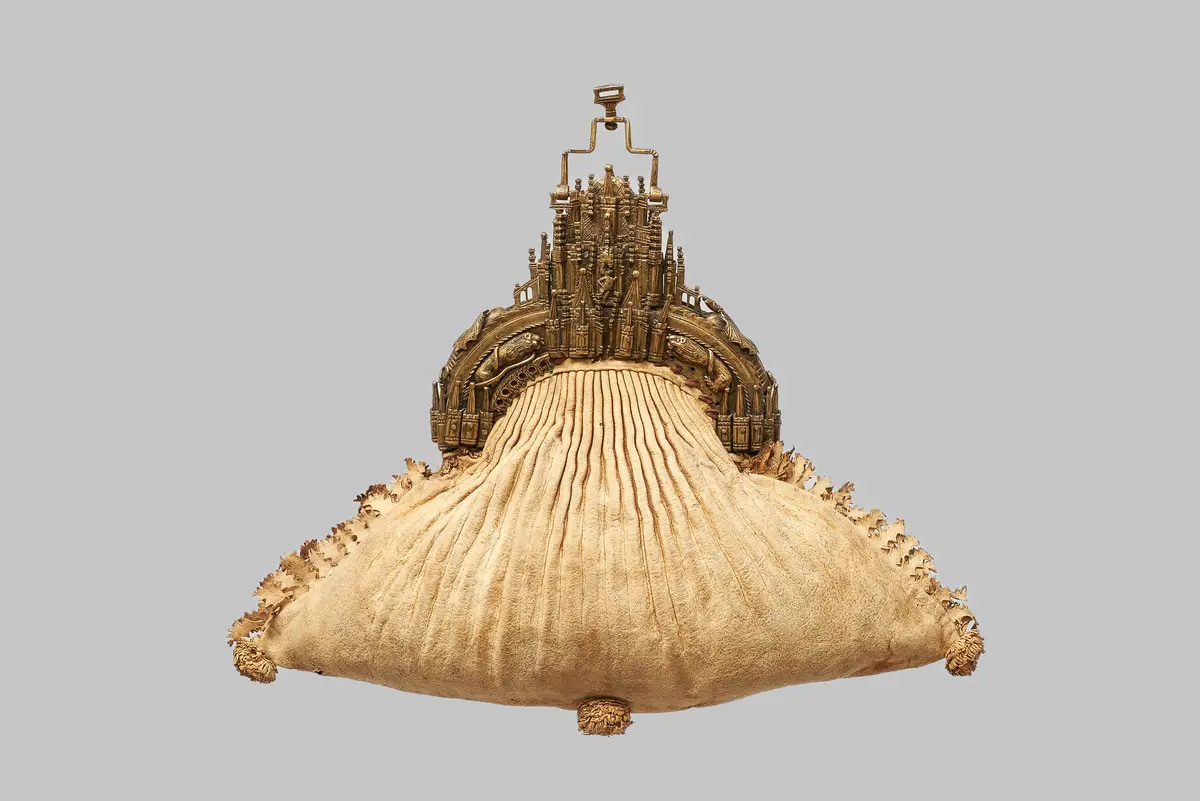
See:
Ludwig Wittgenstein, Philosophical Investigations, trans. Anscombe, 1953.
Millie Bobby Brown in “Inside Millie Bobby Brown’s Louis Vuitton Bag” on Vogue channel, 2025.
Oliver Postgate and Peter Firmin, Bagpuss, Smallfilms, 1974.
Pierre Chabet in Samuel Beckett as Director, in The Theatre Workbook ed. Knowlson, 1980.
Ursula K. Le Guin, The Carrier Bag Theory of Fiction, 1986.
one of your best, i think.... 'butcher's choice' reallygood. i like ur fond tone when writing about bobby brown ...... also it just dawned on me when reading this that you guys have the same first name. how strange